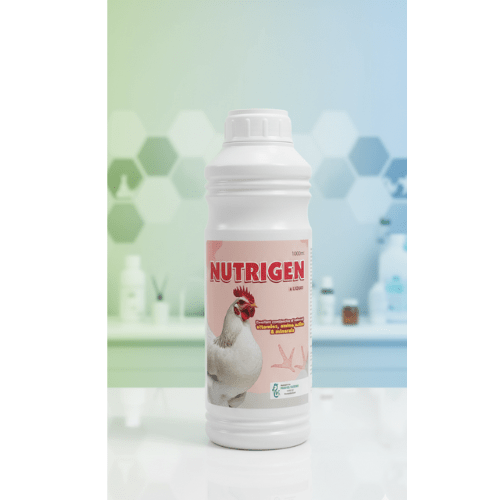
Featured Product: NUTRIGEN LIQUID
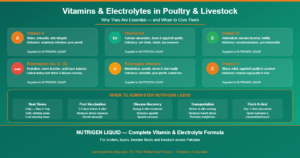
After a Gumboro outbreak, birds need intensive nutritional support. NUTRIGEN LIQUID provides a complete blend of vitamins A, D3, E, B-complex and electrolytes to restore immunity and accelerate recovery. Add 1 ml per litre of drinking water during and after disease challenges.
Gumboro disease — also known as Infectious Bursal Disease (IBD) — is one of the most economically devastating viral infections affecting poultry farms across Pakistan. Left unmanaged, it can kill up to 30% of an unvaccinated flock and silently destroy immunity in surviving birds, leaving them vulnerable to every secondary infection on the farm.
At Poulive Trading, we work closely with farmers and veterinarians to provide expert veterinary medicines and guidance. This comprehensive guide covers everything you need to know about Gumboro disease — from early warning signs to vaccination protocols and supportive care.
What Is Gumboro Disease?
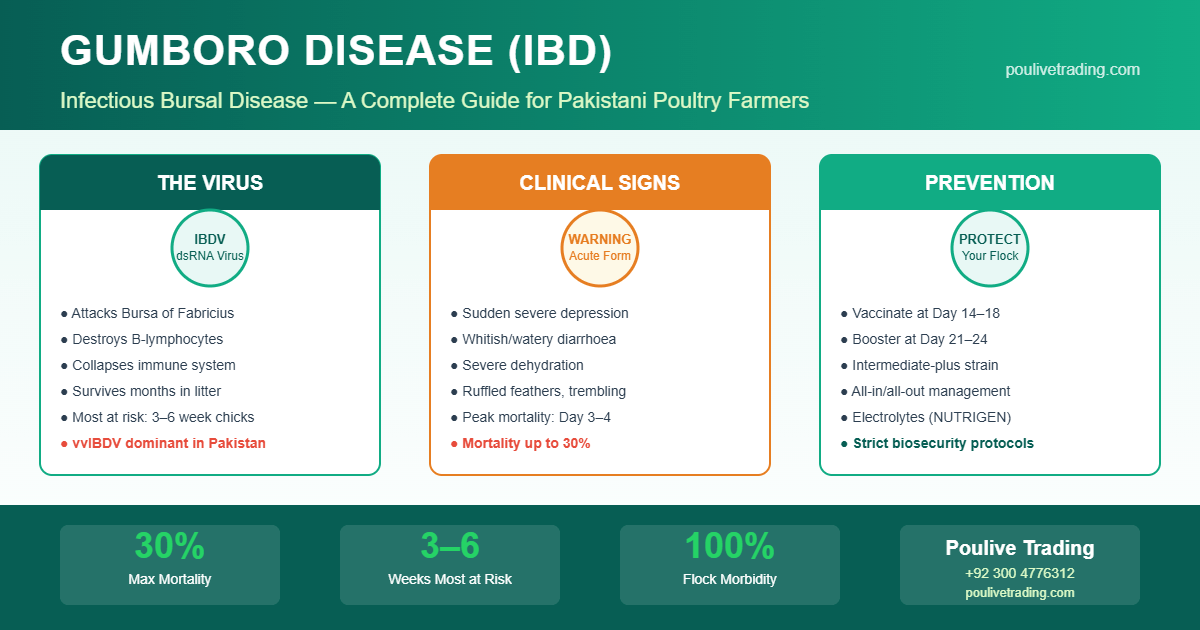
Gumboro disease is caused by the Infectious Bursal Disease Virus (IBDV), a double-stranded RNA virus in the Birnaviridae family. The virus attacks the bursa of Fabricius — the primary organ responsible for B-lymphocyte (antibody) development in young chickens. When the bursa is destroyed, the bird’s entire immune system collapses.
In Pakistan, the very virulent strain (vvIBDV) is predominant. Variant strains causing subclinical immunosuppression also circulate, driving widespread vaccine failures on many farms.
Which Birds Are Most Susceptible?
- Broiler chicks aged 3–6 weeks: Peak risk — acute disease and mortality up to 30%
- Layer replacement pullets: Early infection permanently impairs immune development
- Unvaccinated or under-vaccinated flocks: Catastrophic losses possible
- Immunosuppressed birds (Marek’s disease, mycotoxin exposure): Increased vulnerability
Clinical Signs of Gumboro Disease
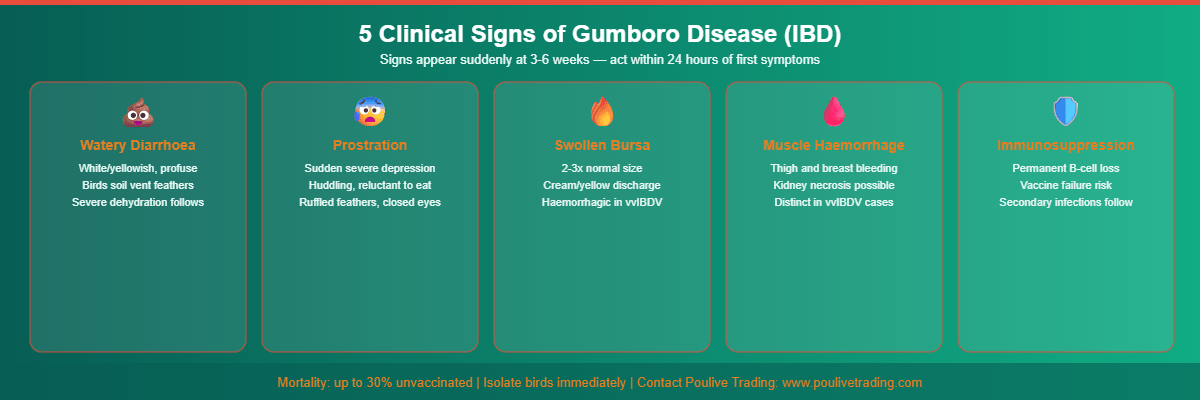
Acute Form (vvIBDV)
- Sudden onset of severe depression and inactivity
- Ruffled feathers; birds huddle near heat sources
- Watery or whitish diarrhoea staining vent feathers
- Severe dehydration — birds may peck each other’s vents
- Loss of appetite and reduced water consumption
- Trembling, unsteady gait, prostration
- Mortality spike peaking at Day 3–4 post-infection
Subclinical (Immunosuppressive) Form
In partially immune or older birds, IBDV causes no obvious clinical signs yet leaves the flock dangerously vulnerable to Newcastle disease, Marek’s disease, Inclusion Body Hepatitis (IBH), and E. coli infections. Vaccine failures are the first clue of subclinical IBD on many Pakistani farms.
Post-Mortem Findings
- Enlarged, oedematous bursa of Fabricius (early) → atrophied/shrunken bursa (chronic)
- Gelatinous yellow exudate inside the bursa
- Haemorrhages in thigh and breast muscles (hallmark of vvIBDV)
- Haemorrhage at the proventriculus-gizzard junction
- Pale or swollen kidneys with urate deposits
- Enlarged, congested spleen
Vaccination Programme for Pakistan
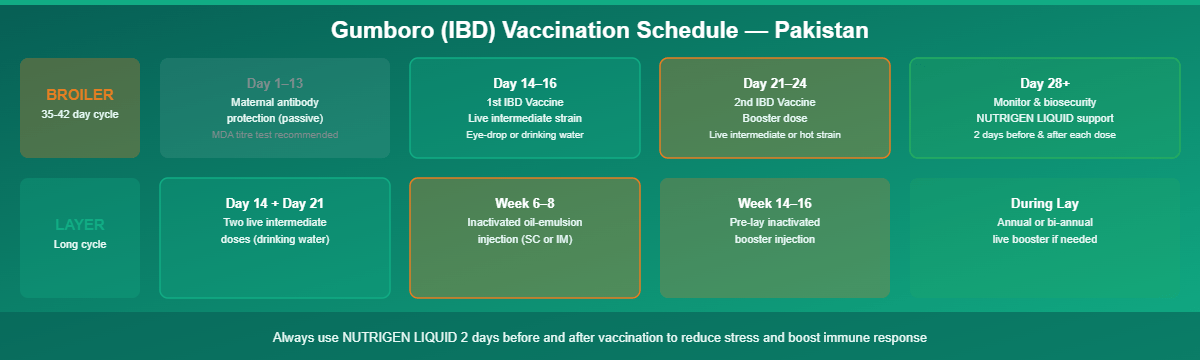
An effective, timely vaccination programme is the cornerstone of Gumboro management. The schedule must account for local vvIBDV pressure and maternal antibody (MDA) levels.
- Day 1 (hatchery): Some programmes use in-ovo or day-of-hatch spray vaccines
- Day 14–18: First live IBD vaccine (intermediate-plus strain) via drinking water
- Day 21–24: Booster dose in high-challenge areas
- Breeders: Killed IBD vaccine at 16–18 weeks for strong maternal antibody transfer
The key to winning against Gumboro in Pakistan is timing — overcoming maternal antibodies with the right strain at precisely the right moment. Always have your chicks titred and design a farm-specific programme with a qualified veterinarian.
Dr. Hafiz Muhammad Yousuf, CEO – Poulive Trading
Supportive Treatment
- Electrolytes and multivitamins in drinking water to combat dehydration and stress — NUTRIGEN LIQUID is ideal
- Prescribed antibiotics under veterinary guidance to prevent secondary bacterial infections
- Anti-stress supplements to stabilise surviving birds and improve recovery rates
- Improved ventilation and litter management to reduce environmental stressors
- Isolate affected pens immediately to slow transmission
Biosecurity Measures
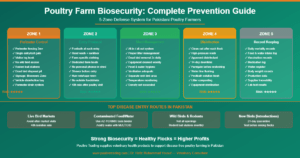
- Practise strict all-in/all-out management — never mix birds of different ages
- Thoroughly clean and disinfect houses between every flock — IBDV survives months in litter
- Use proven disinfectants (formalin, iodine-based products) — IBDV resists many common disinfectants
- Restrict visitor access; enforce footbaths and protective clothing
- Source chicks only from IBD-free, certified hatcheries with documented MDA profiles
Economic Impact on Pakistani Poultry Farmers
A single IBD outbreak on a 50,000-bird broiler farm can cost hundreds of thousands of rupees through direct mortality, cascading secondary disease outbreaks, repeated vaccine failures, and elevated medication costs. Subclinical immunosuppression on layer farms compounds losses throughout the entire laying cycle.
Consult Poulive Trading’s veterinary team for tailored Gumboro management solutions for your farm. Call us at +92 300 4776312 or email info@poulivetrading.com.
Disclaimer: This article is for educational purposes only. Always consult a licensed veterinarian for flock-specific diagnosis, vaccination, and treatment protocols.