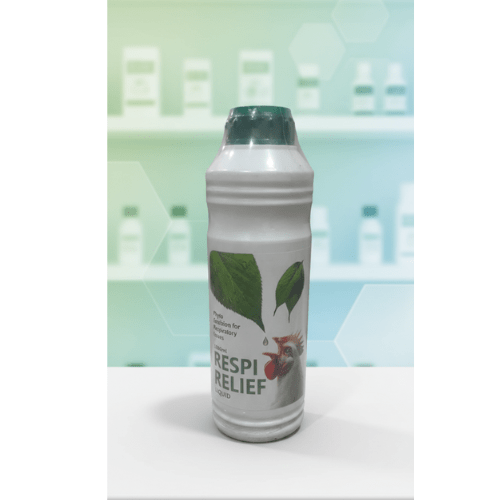
Featured Product: RESPI-RELIEF LIQUID
RESPI-RELIEF LIQUID is a specially formulated respiratory support solution combining mucolytics, bronchodilators and immune-boosting vitamins. It clears airways, reduces mucus build-up and helps flocks recover faster from CRD, IB and other respiratory infections. Administer via drinking water for 3–5 days during outbreaks.
Respiratory disease is the number-one complaint among Pakistani broiler and layer farmers. Whether it is gasping, rattling breathing, nasal discharge, or a sudden drop in feed intake, respiratory problems cost the Pakistani poultry industry enormous sums annually through treatment costs, reduced weight gain, poor FCR, and mortality.
Understanding the major causes — and acting quickly with the right products — is essential. Poulive Trading‘s RESPI-RELIEF LIQUID is specifically formulated to provide fast, effective respiratory support for your flock alongside appropriate veterinary treatment.
Major Causes of Respiratory Disease in Pakistani Poultry
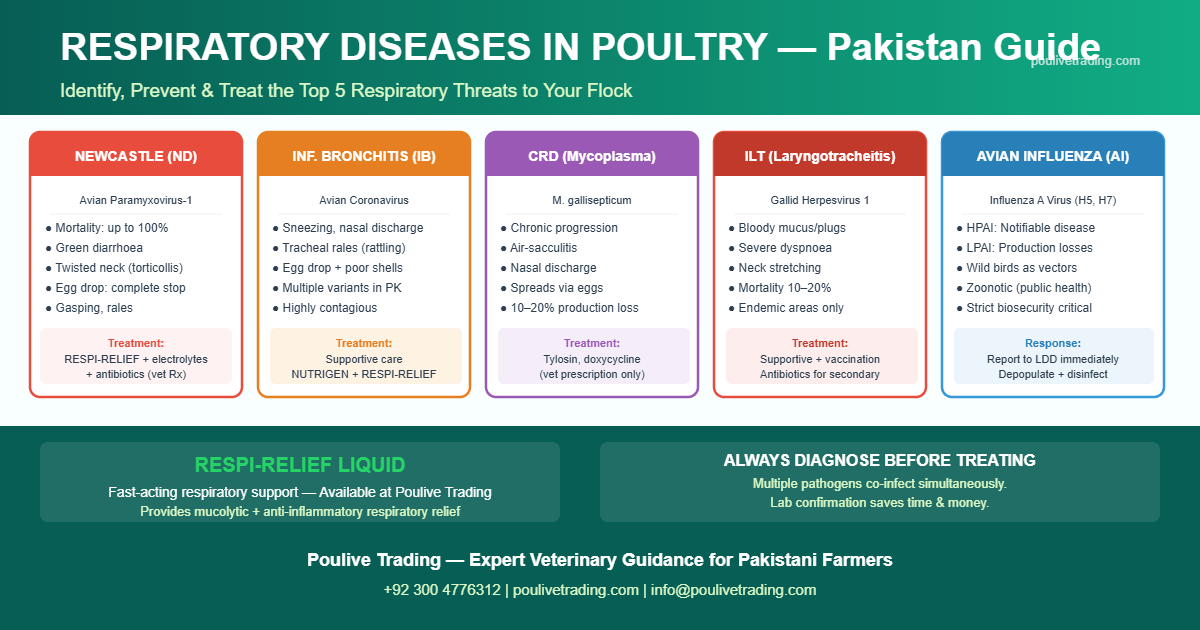
1. Newcastle Disease (ND / Ranikhet Disease)
Caused by Avian Paramyxovirus Type 1, velogenic ND strains cause severe respiratory distress combined with neurological signs and mortality up to 100% in unvaccinated flocks. Even vaccinated flocks suffer performance drops from circulating virulent field strains. ND is the most economically important poultry disease in Pakistan.
2. Infectious Bronchitis (IB)
Caused by Avian Coronavirus, IB spreads rapidly through airborne transmission, causing tracheal rales, sneezing, nasal discharge, and in layers causes severe egg drop with poor shell and albumen quality. Multiple IB variants (793B, QX, Massachusetts) circulate in Pakistan.
3. Chronic Respiratory Disease (CRD) — Mycoplasma gallisepticum
Mycoplasma gallisepticum causes chronic, slowly progressive respiratory disease characterised by coughing, nasal discharge, tracheal rales, and air-sacculitis. It rarely kills birds outright but causes persistent production losses and dramatically potentiates other respiratory pathogens. CRD is extremely common in Pakistan and spreads vertically through eggs.
4. Infectious Laryngotracheitis (ILT)
Caused by Gallid Herpesvirus 1, ILT causes bloody mucus and severe dyspnoea. Affected birds strain to breathe and may expectorate blood-stained plugs. Mortality can reach 10–20% in acute outbreaks on affected farms.
5. Avian Influenza (AI)
Both Low Pathogenic (LPAI) and High Pathogenic (HPAI) strains cause respiratory signs in Pakistan. HPAI is notifiable and requires government intervention; LPAI strains circulate widely and cause significant subclinical production losses on commercial farms.
Clinical Signs to Watch For
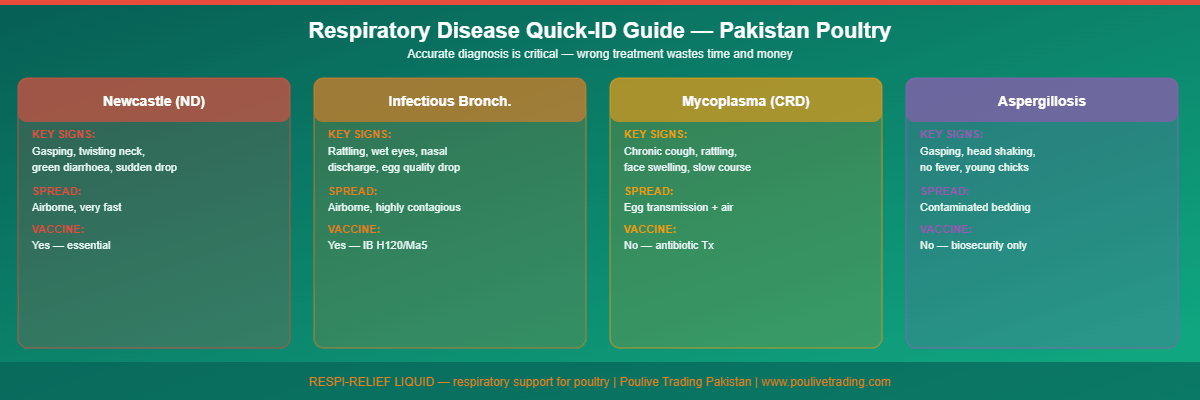
- Coughing, sneezing, and nasal discharge (clear or mucoid)
- Gasping, open-mouth breathing, neck stretching
- Tracheal rales — rattling or gurgling sounds when a bird is held close to your ear
- Swollen head, periorbital swelling, wet eye (lacrimation)
- Sudden drop in feed and water intake
- Drop in egg production with abnormal shell quality
- Neurological signs: torticollis, circling (suggests Newcastle Disease)
- Bloody mucus expelled from trachea (suggests ILT)
- Sudden unexplained mortality in a vaccinated flock
Diagnosing Respiratory Disease Accurately
Multiple pathogens often co-infect simultaneously. Accurate diagnosis requires laboratory confirmation. Your veterinarian should submit:
- Tracheal and cloacal swabs in viral transport medium for PCR panels (ND, IB, AI, ILT)
- Serum samples for ELISA antibody titres (ND, IB, MG, AI)
- Fresh carcasses for complete post-mortem with air-sac lesion scoring
Do not start treatment based on clinical signs alone — the wrong antibiotic for a viral disease will not help and promotes resistance.
Treatment Protocol
Viral Respiratory Diseases — Supportive Care
- RESPI-RELIEF LIQUID from Poulive Trading via drinking water — provides respiratory tract support and mucolytic (mucus-thinning) action to reduce distress
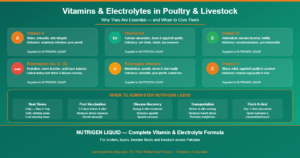
- Electrolytes and multivitamins to maintain hydration and reduce oxidative stress (NUTRIGEN LIQUID)
- Prescribed antibiotics under veterinary guidance to control secondary bacterial infections
- Improve ventilation to reduce airborne pathogen load and ammonia irritation
Bacterial and Mycoplasmal Disease — Targeted Antibiotics
CRD (M. gallisepticum) and secondary bacterial infections (E. coli, Ornithobacterium rhinotracheale) respond to targeted antibiotic therapy. Commonly used classes include tylosin, enrofloxacin, doxycycline, and tilmicosin — always under veterinary guidance and based on sensitivity testing.
Prevention: A Year-Round Strategy
Vaccination Programme
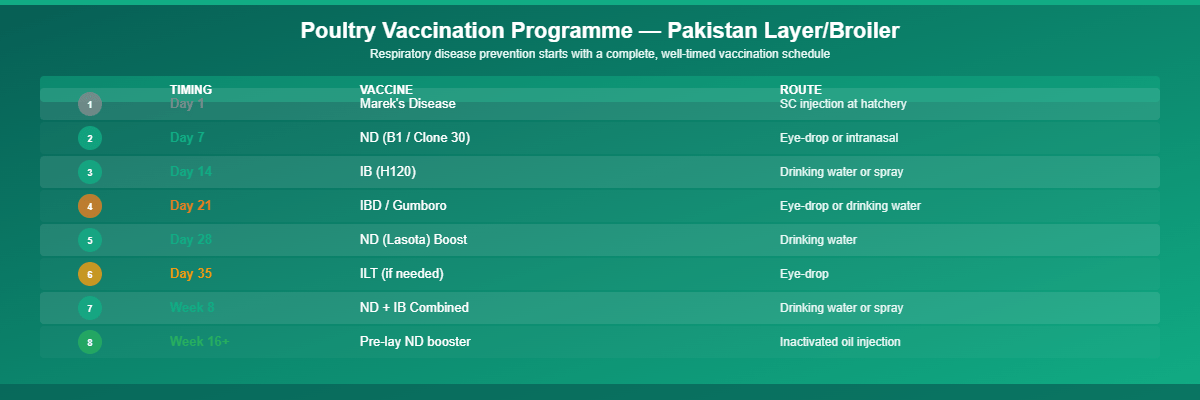
- Newcastle Disease: Live La Sota via eye-drop + killed ND oil-emulsion booster for breeders and layers
- Infectious Bronchitis: Mass application via spray or drinking water — match serotype to local circulating strain
- ILT: Live attenuated vaccine in endemic areas
- AI: Government-approved inactivated AI vaccines where applicable
Environmental Management
- Maintain proper ventilation — minimum 0.15 m² per bird for broilers
- Control litter moisture — wet litter raises ammonia and pathogen load dramatically
- Avoid extreme temperature fluctuations especially during seasonal transitions
- All-in/all-out management — the single most important biosecurity practice
RESPI-RELIEF LIQUID is available from Poulive Trading. Contact us for immediate delivery: +92 300 4776312
Disclaimer: Always seek a licensed veterinarian’s diagnosis and prescription before treating a respiratory disease outbreak in your flock.