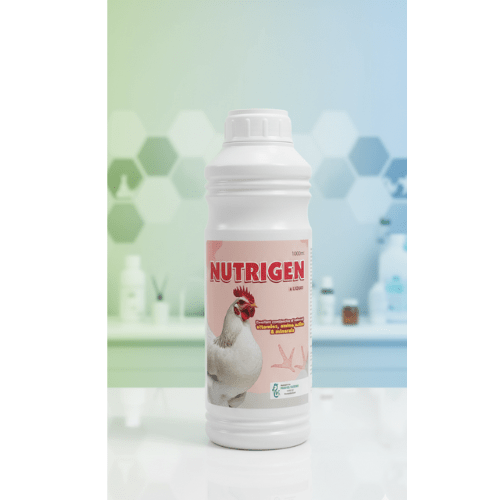
Featured Product: NUTRIGEN LIQUID
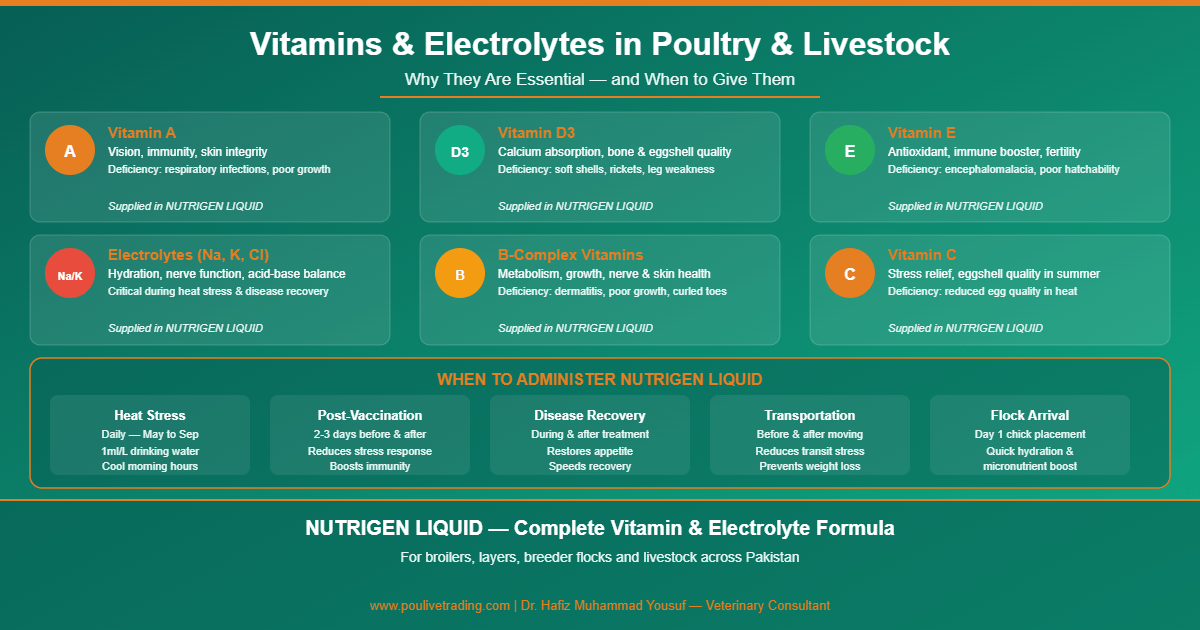
NUTRIGEN LIQUID is a complete, water-soluble vitamin and electrolyte supplement for poultry and livestock. It contains vitamins A, D3, E, K, the full B-complex, and balanced electrolytes (Na, K, Cl) in a highly bioavailable liquid form. Ideal for heat stress, post-vaccination recovery, transportation stress and routine flock health maintenance.
One of the most preventable causes of production loss on Pakistani poultry and livestock farms is overlooked every day: vitamin and electrolyte deficiency. Under normal conditions, a balanced commercial diet provides sufficient micronutrients. But the moment a bird or animal faces stress — heat, disease, vaccination, transportation, or a disease outbreak — its demand for vitamins and minerals spikes dramatically, and commercial feed alone cannot keep up.
Poulive Trading‘s NUTRIGEN LIQUID is formulated specifically to meet this elevated demand. In easy-to-use liquid form for drinking water administration, NUTRIGEN delivers rapid absorption of essential vitamins and electrolytes precisely when your animals need them most.
Why Stress Depletes Vitamins and Electrolytes
- Adrenal glands release cortisol under stress — this depletes Vitamin C (ascorbic acid) stores rapidly
- Respiratory alkalosis from panting in heat causes bicarbonate loss, disrupting electrolyte balance
- Oxidative stress from infection depletes Vitamins A and E and selenium
- Reduced feed and water intake during illness cuts off the normal supply of vitamins through feed
- Diarrhoea rapidly depletes sodium, potassium, and chloride — critical electrolytes for nerve and muscle function
The Role of Key Vitamins in Poultry and Livestock
Vitamin A
Critical for maintaining all mucosal surfaces — the gut lining, respiratory tract, and reproductive epithelium. Deficiency causes poor vaccine response, increased respiratory disease susceptibility, night blindness, and reduced hatchability in breeders.
Vitamin D3
Essential for calcium and phosphorus absorption. Deficiency causes rickets in chicks, cage layer fatigue in layers (osteoporosis), and soft-shelled eggs. Pakistan’s indoor housing systems limit sun exposure, making adequate dietary D3 critical.
Vitamin E
The primary fat-soluble antioxidant. Works synergistically with selenium to prevent oxidative muscle damage (white muscle disease). Studies show 2–4× higher vaccine antibody titres in birds receiving adequate Vitamin E supplementation during vaccination.
B Vitamins
- B1 (Thiamine): Carbohydrate metabolism and nerve function — deficiency causes star-gazing posture (polyneuritis)
- B2 (Riboflavin): Deficiency causes curled toe paralysis and diarrhoea in young chicks
- B6 (Pyridoxine): Protein and amino acid metabolism
- B12 (Cobalamin): Red blood cell formation and growth — deficiency causes anaemia and poor hatchability
- Niacin: Energy metabolism — deficiency causes bowed legs in broilers and turkey poults
- Pantothenic Acid: Skin and feather health — deficiency causes scab-like lesions around beak and vent
- Biotin: Fat metabolism and hoof/claw integrity in livestock
- Folic Acid: Cell division — critical for embryonic development
The Role of Electrolytes
Electrolytes — primarily sodium (Na⁺), potassium (K⁺), chloride (Cl⁻), and bicarbonate (HCO₃⁻) — regulate:
- Water balance and hydration status at the cellular level
- Acid-base balance (blood and tissue pH regulation)
- Nerve impulse transmission and muscle contraction
- Nutrient transport across cell membranes
In hot weather, birds lose electrolytes rapidly through panting. In diarrhoeal disease, electrolytes are lost in faeces. Without rapid replenishment, birds collapse from dehydration and electrolyte imbalance.
When to Use NUTRIGEN LIQUID
- During and after heat stress — temperatures above 32°C in the poultry house
- Post-vaccination — to support immune response and reduce vaccine stress reactions
- During disease outbreaks — maintain hydration and organ function while birds fight infection
- After transportation of day-old chicks, replacement pullets, or livestock
- During antibiotic therapy — antibiotics disrupt gut flora and reduce B vitamin synthesis
- During moulting — supports feather regeneration and recovery of production
- At day-old chick placement — overcomes transport and hatching stress, promotes early intake
Signs Your Flock Needs Supplementation Now
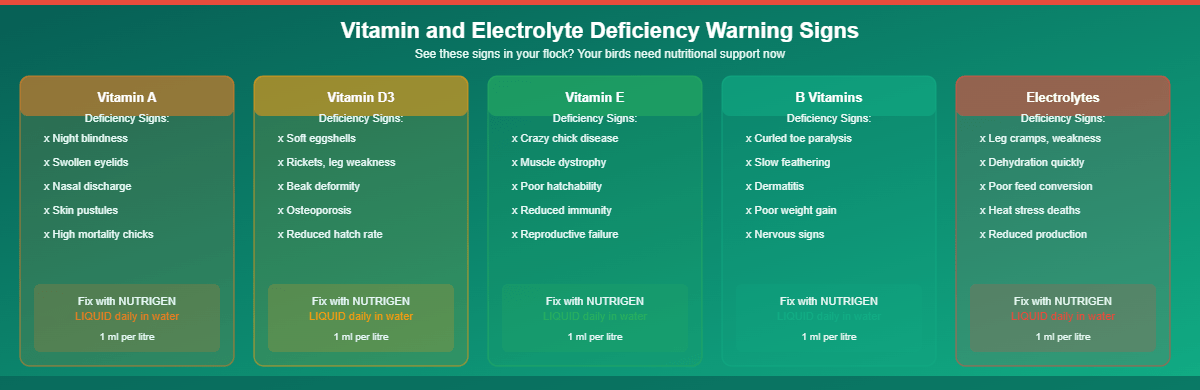
- Birds panting with wings held away from the body — classic heat stress
- Sudden drop in feed intake without an obvious infectious cause
- Watery droppings without blood (dehydration)
- Poor or uneven feathering in growing birds
- Lethargy and reduced activity for 24–48 hours post-vaccination
- Slow recovery from any disease or treatment programme
NUTRIGEN LIQUID Dosage
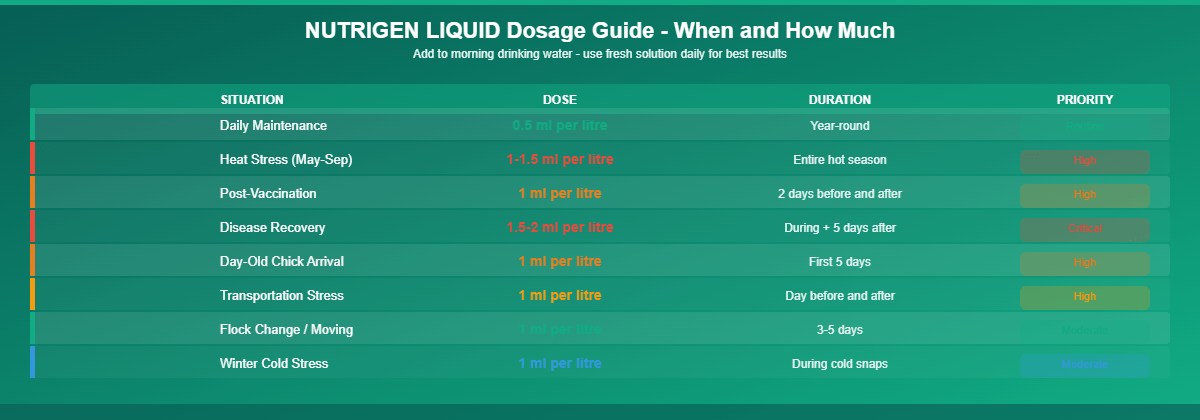
Administer NUTRIGEN LIQUID via drinking water as directed on the product label or as recommended by your veterinarian. As a liquid formula it disperses rapidly, ensuring even dosing throughout the flock — especially important when sick birds have reduced appetite but maintain some water consumption.
NUTRIGEN LIQUID is available from Poulive Trading. Order today for next-day delivery across major cities in Pakistan. Contact: +92 300 4776312
Disclaimer: Supplementation programmes should complement balanced feed formulation, not replace it. Consult a poultry veterinarian or animal nutritionist for specific recommendations for your flock.